
Discussants: members of the Bank of Russia Board of Directors, senior executives of the Monetary Policy Department, the Research and Forecasting Department, and other Bank of Russia Departments and Main Branches.
The Monetary Policy Department together with the Research and Forecasting Department presented the results of the analysis of the current economic developments nationwide and worldwide, as well as the suggestions regarding the baseline macroeconomic forecast for 2026–2029 and its variations. The Bank of Russia Main Branches provided information on the situation in the Russian regions, including based on business surveys. Furthermore, the participants in the discussion considered the information from the Financial Stability Department and the International Settlements Department.
The discussants’ opinions are based on the data available as of 23 October 2026.
This Summary covers the key points of the discussion.
 Economic situation and inflation
In 2026 Q3, current price growth accelerated to 8.0% on average (seasonally adjusted annualised rate, SAAR) from 4.8% SAAR in 2026 Q2. Core inflation rose from 4.5% SAAR in 2026 Q2 to 6.2% SAAR in 2026 Q3. Households’ inflation expectations and businesses’ price expectations slightly decreased in October compared with September, while remaining high. Analysts raised their inflation forecasts for 2026–2028. According to high-frequency data, economic activity continued to grow at a moderate pace in 2026 Q3. The Bank of Russia’s Business Climate Index rose in October following its decline in 2026 Q3. Unemployment had remained almost unchanged, i.e. close to its all-time lows, since mid-2025. In August 2026, it came in at 2.2% (seasonally adjusted, SA). Growth in nominal and real wages continued to decelerate in July (year-on-year).
In 2026 Q3, current inflationary pressures intensified significantly. The main factor was an increase in prices for motor fuel due to temporary shutdowns at certain oil refineries. During the quarter, inflation dynamics were mixed. After its acceleration in July–August, current price growth slowed in September. In August–September, the growth rates of petrol prices remained elevated but notably below the June–July levels. Concurrently, the increase in fuel prices which had already taken place continued to feed through to prices for most goods with a high transport cost component.
According to high-frequency data, the situation in the fuel market stabilised in October. Concurrently, the indexation of housing and utility tariffs additionally contributed to inflation. According to Rosstat’s preliminary estimate, the said tariffs rose by 13.8% on average. The Bank of Russia’s July forecast relied on average indexation values set by the Directive of the Russian Government for regions and assumed a 12.4% increase in these tariffs. However, in most regions, the actual indexation exceeded these values and was in the upper part of the provided ranges of permissible deviations. The increase in the tariffs had already translated into the weekly price statistics. However, it will be possible to finally assess its contribution to inflation in October only after complete monthly data become available.
Inflation expectations stayed high. In October, households’ inflation expectations and businesses’ price expectations edged down, which might be attributed to slower growth in fuel prices and the ruble appreciation. However, the said expectations remained close to their two-year highs. The participants did not rule out a further response of households’ inflation expectations to the increase in housing and utility tariffs, since the survey in October had been conducted before most households received their utility bills.
Underlying inflationary pressures strengthened. In 2026 Q3, most indicators of underlying price growth stayed in the range of 5–6% SAAR vs 4–5% SAAR in 2026 H1. The meeting attributed this primarily to indirect and second-round effects of temporary shutdowns at production facilities in certain sectors. These effects were more significant than estimated previously and affected a wide range of goods and services. In these circumstances, most discussants believed that moderately tight monetary conditions should be maintained for a longer period than assumed in the July forecast for underlying inflation to decrease. Certain discussants noted that the acceleration of underlying inflation partially reflected accumulated effects of the monetary policy easing that had taken place earlier. They argued that a consistent decline in underlying inflation to 4% might require tighter monetary conditions than those that had prevailed in recent quarters.
According to the participants, inflation in 2026 will come in above the July projections. The decrease in production capacity in certain sectors persisted longer than expected previously. Its restoration may continue in 2027. The participants expected inflation, including in terms of underlying components, to gradually decelerate during 2027. The pace of its deceleration will depend on that of the restoration of production capacity and the dynamics of inflation expectations and domestic demand influenced by the monetary policy pursued.
The economy continued to grow at a moderate pace in 2026 Q3. Economic activity was somewhat stronger than estimated in July. Despite a temporary decline in output in certain sectors, production was expanding overall. According to recent surveys, business sentiment improved notably after its deterioration over the summer months. Businesses increased both their current output and demand estimates and their expectations for the next three months.
In 2026 Q3, investment activity was recovering gradually following its weak dynamics at the beginning of the year. This was evidenced by an upturn in the output and imports of investment goods as well as positive dynamics in construction. Investment was partially channelled into restoring damaged facilities and protecting the infrastructure. It was aimed primarily at restoring production capacity to its previous level.
Growth in consumer activity slowed in 2026 Q3. After its surge in 2026 Q2, consumption dropped in August and resumed its moderate growth in September, according to high-frequency data. The participants tended to attribute the August decline to a correction following strong demand in 2026 Q2, which had been partially driven by consumers making purchases they had previously postponed and a temporary increase in demand for durable goods amid the ruble appreciation. It is possible that spending dynamics in August were also affected by more subdued domestic tourism during the holiday season, partially owing to reduced population mobility amid developments in the fuel market. However, estimates of further consumption growth differed. Most participants expected its moderate dynamics to persist, given a more modest rise in households’ incomes. Contrastingly, certain participants considered that slower consumption growth observed in 2026 Q3 was not evidence of any significant change in the established trend. According to them, consumption might resume growth at a higher pace after the temporary correction.
The labour market tightness continued to ease gradually. Enterprises’ estimates of their staffing levels improved, with their recruitment and pay rise plans becoming more moderate. The dynamics of real wages and the growth rates of labour productivity continued to converge, although the gap between them persisted. Unemployment was close to its all-time lows. The participants noted that the situation in the labour market remained diverse: workers were made redundant in some sectors, while demand for staff remained high in others.
Fiscal policy continues to make a substantial contribution to growth in domestic demand. The updated budget projections assume an increase in federal budget spending in 2026 relative to 2025. Despite more moderate growth in 2026 Q3, federal budget spending increased faster over the first nine months of the year than projected for 2026 as a whole. Therefore, to meet the annual budget targets, spending must grow more slowly in 2026 Q4 than in the first nine months of the year.
The new medium-term budget projections were broadly consistent with the assumptions underlying the July forecast. They even envisage a slightly faster reduction in the structural primary deficit. Its gradual decrease to zero in 2029 will have a disinflationary effect. A decline in the base oil price under the fiscal rule will also contribute to disinflation by limiting the impact of high oil and gas revenues on domestic demand. However, the structural primary deficit will persist in 2026–2028, while government demand will remain elevated. Given the limited capacities to expand supply, maintaining balance in the economy during this period will require more subdued growth in other components of domestic demand than would be needed in case of a zero structural primary deficit.
Following the discussion, the participants concluded that the output gap had turned positive again in 2026 Q3. Domestic demand continued to grow, while supply capacity in certain sectors was temporarily constrained. The emergence of an imbalance between supply and demand was evidenced by stronger underlying inflationary pressures. Model-based estimates also pointed to this. In the participants’ view, the positive output gap will gradually close as production capacity recovers, provided that domestic demand growth remains subdued.
 Monetary conditions
Money market rates and yields on federal government bonds (OFZ) rose over the period since the key rate meeting in September. Deposit rates edged up. Interest rates on corporate loans slightly increased in August, while those on retail loans went down. Credit activity remained elevated in 2026 Q3, driven primarily by the corporate segment. Retail lending was increasing at a moderate pace. In September, the growth rate of ruble money supply (М2) edged up year-on-year, while that of broad money (М2Х), adjusted to exclude the effects of exchange rate movements, continued to decrease year-on-year.
Price monetary conditions in nominal terms had tightened slightly since the September meeting.
- Yields on medium- and long-term OFZ increased most significantly. The meeting attributed this to an upward revision of expectations regarding the key rate path and a higher term premium amid intensifying inflation risks and persistent uncertainty. Breakeven inflation derived from yields on long-term inflation-indexed OFZ (OFZ-IN) rose to all-time highs. It is possible that the expansion of the government borrowing programme for 2026 had an additional effect on OFZ yields.
- Yields on corporate bonds went up as well, particularly for issuers with fairly low credit ratings. This was the result of both a rise in OFZ yields and higher credit risk premiums, as investors assessed borrowers’ financial position with more caution.
- According to high-frequency data, in September, loan rates were growing following a rise in yields on OFZ and corporate bonds. However, based on data for previous months, rates in certain segments were changing diversely. Average interest rates on long-term corporate loans rose in July–August, mainly due to a decline in the share of loans granted on quasi-market terms, while rates on market-based loans declined. Average interest rates on retail loans went down, due in part to an increase in the volume of subsidised mortgages and, consequently, their share in new lending ahead of changes to the terms of the Family Mortgage programme.
A rise in nominal rates was largely offset by growth in inflation expectations over previous months. Therefore, the participants concurred that price monetary conditions in real terms had not changed significantly.
Non-price conditions of corporate lending tightened slightly, mainly for large companies. For SMEs, these conditions did not change significantly.
Credit activity remained elevated in 2026 Q3, driven primarily by the corporate segment. Corporate lending was growing fast over recent months. The participants deemed it possible that additional demand for corporate loans had been linked to more modest inflows of budget funds during the summer months. While waiting for payments under government contracts, companies could temporarily take out larger working capital loans. Retail lending was moderately expanding under the influence of the accumulated effects of monetary policy easing. September saw a temporary acceleration of growth in mortgage lending in anticipation of changes to the Family Mortgage terms from 1 October.
Money supply growth remained elevated. It was still significantly driven by lending activity and budget operations. Year-to-date growth in ruble money supply was above the range recorded in 2016–2019 and slightly above last year’s trajectory, although the gap with the latter had narrowed.
The saving ratio of households was gradually declining. Most participants noted that these dynamics were consistent with the easing of monetary conditions that had taken place earlier. However, the saving ratio remained at a high level, and its decline was not accompanied by a significant acceleration of consumption growth. Nevertheless, some participants expressed concerns that the decline in the saving ratio could accelerate, particularly amid elevated household inflation expectations, and lead to faster consumption growth.
Most participants assessed monetary conditions as moderately tight. In their view, despite the earlier easing, monetary conditions continued to restrain lending and domestic demand, although this restraining effect had weakened. At the same time, some participants noted that the credit impulse had been gradually increasing and had turned positive in recent months, indicating stronger support for domestic demand. Combined with a sizeable fiscal stimulus, this could lead to faster aggregate demand growth than would be necessary to return inflation to the target. In these participants’ view, monetary conditions might have moved close to neutral or even become moderately accommodative.
The corporate sector’s overall financial position remained sound, with loan portfolio quality staying acceptable. However, conditions varied across sectors and companies. The year-on-year decline in companies’ net financial result in January–July 2026 was more pronounced than in 2026 H1. An increase in the financial result in oil and natural gas production partly offset its decline in other sectors. Despite the decline in the aggregate financial result, most companies continued to service their debt obligations on time. Some borrowers continued to experience financial difficulties: the number of corporate bond defaults edged up, mainly among issuers with low or no credit ratings. However, such cases remained few. In September and the first half of October, the share of restructured loans in the corporate loan portfolio was close to its average since the beginning of 2026. Overall, the volume of non-performing loans remained limited.
 External environment
According to high-frequency data, global economic growth remained steady in 2026 Q3. Inflationary pressures in major economies were mounting, with market expectations regarding the paths of the policy rates of the largest central banks being revised upwards. Global prices for oil and most other Russian exports stayed at a high level above the 2025 averages. In 2026 Q3, the values of Russian exports and imports went up. Since the September meeting, the ruble had appreciated somewhat against the main currencies.
The global economy continued expanding at a steady pace, despite persistently high prices in commodity markets. Concurrently, the adverse consequences of the Middle East conflict were more tangible for countries dependent on the imports of commodities. In major economies, investment in artificial intelligence technologies remained one of the factors driving growth. Positive effects of this investment also extended to countries integrated into respective production chains.
The oil shock continued to affect global inflation. The increase in prices for energy commodities was gradually translating into prices for other goods and services, increasing inflationary pressures and inflation expectations, including in the US and the euro area. Against this backdrop, financial market participants raised their expectations regarding the paths of the policy rates of major central banks. The discussants noted that central banks might need to pursue tighter monetary policy than assumed before in order to mitigate inflationary consequences of the oil shock.
Growing yields on government bonds of advanced economies were increasing risks for global financial markets. In a number of countries, the yields had reached their maximum levels over the past decades. The participants discussed possible reasons for this growth, which included rising real interest rates (due in part to the revision of the estimates of their neutral level), expectations of higher inflation, as well as increasing term premiums amid high budget deficits and the growing need for investment financing.
Global oil prices came in above expectations in 2026 Q3. The assumption in the July forecast about the timing of a normalisation of the situation in the Middle East proved incorrect. In these circumstances, the participants considered it reasonable for the revised baseline scenario to reflect a later recovery of shipping through the Strait of Hormuz and a higher trajectory of prices for Russian oil in 2026–2027 than anticipated in July.
The values of Russian exports and imports went up in 2026 Q3 both quarter-on-quarter and year-on-year. The increase in the export value was driven by rising global prices for oil and other commodities. However, export quantities remained under pressure due to temporary shutdowns at oil refineries, constraints on the export infrastructure, and shipping issues in the Black Sea. Increasing crude supplies only partially offset the decline in the exports of petroleum products. The participants noted that the infrastructure recovery took longer than assumed before. Imports growth was generally aligned with the dynamics of the economy: over the past year, the imports-to-GDP ratio had not changed materially.
The participants also discussed the potential impact of the resumption of the exports of diesel fuel. Its current production volumes are sufficient to both meet domestic demand and resume export supplies. Therefore, this decision will not have any significant impact on the domestic market.
Restrictions on export logistics continued to constrain agricultural exports. The discussants noted that, in the short term, the declining exports of grains and oil crops increased their supply in the domestic market and restrained growth in food prices. However, long-lasting restrictions could reduce export revenues and the profitability of agricultural producers, potentially restraining their production plans.
Since the September meeting, the ruble had appreciated slightly amid the improving terms of trade. Higher global oil prices fed through to export earnings and foreign currency supply with a lag. The discussants deemed it possible that the disinflationary effect of the ruble appreciation had been partially offset by faster growth in global prices and a corresponding rise in import prices. Furthermore, the meeting participants discussed the effect of high oil prices on domestic demand. Unlike the periods before the fiscal rule was introduced, a significant portion of additional oil and gas revenues is saved, which limits their impact on economic activity and inflation, smoothing out fluctuations in domestic demand.
 Inflation risks
The participants in the discussion concurred that proinflationary risks were still outweighing disinflationary ones over the medium-term horizon.
The main proinflationary risks include:
- Growing imbalances between demand and supply. Domestic demand may remain elevated due to persistently high growth rates of lending and a considerable fiscal stimulus. The prolonged lagging of labour productivity growth behind wage dynamics might additionally support inflationary pressures. Concurrently, a longer recovery of production capacities in certain sectors might further limit the potential for expanding supply. As a result, the positive output gap might persist for longer, exacerbating inflationary pressures.
- Persistently high inflation expectations. Households’ and businesses’ elevated inflation expectations might intensify the pass-through of increased costs to prices and slow down the decline in underlying inflation.
- A more significant fiscal impulse over the medium-term horizon. New budget projections assume a gradual decrease in the structural primary deficit to zero in 2029. If the structural primary deficit exceeds the budget projections, the stimulating effect of fiscal policy on domestic demand and inflation may be more significant than expected.
- Deteriorating external conditions. If geopolitical tensions in the Middle East continue for a prolonged period, they might amplify inflationary pressures in the global economy and lead to a faster rise in prices for Russian imports. Persistently high interest rates in major economies and increasing volatility in the government bond market might put at risk the stability of the public finances of these countries and slow down their economic growth. This, in turn, might constrain global economic growth and limit demand for Russian exports.
The main disinflationary risk is:
- A notable slowdown in domestic demand growth. Tight monetary conditions combined with a higher tax burden may have a stronger effect on domestic demand than predicted. Companies might exercise greater caution when planning investment, hiring staff, and raising wages, particularly if expectations regarding future demand worsen. Consumer activity might weaken due to households’ greater propensity to save, fuelled by the precautionary motive amid mounting uncertainty. As a result, domestic demand growth might decelerate considerably, while inflation might come in below the forecast.
 Conclusions for monetary policy and the key rate decision
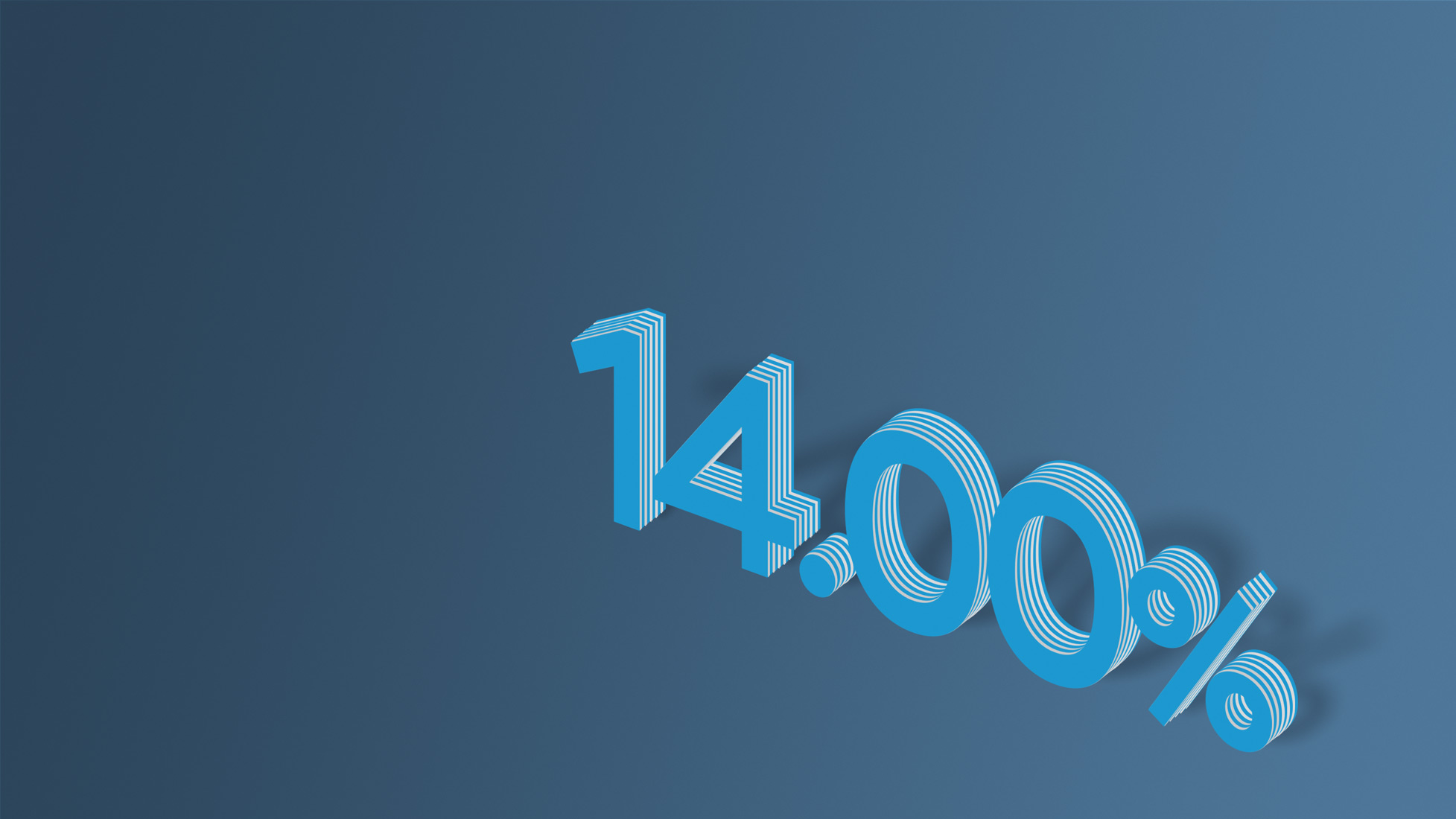
The meeting considered the updated forecast estimates, including the baseline scenario and its variations. Having analysed the new data and discussed the forecast, the participants reached a broad consensus that the key rate should be kept at 14.00% per annum. The main arguments were as follows.
- Persistently high underlying inflationary pressures. Most measures of underlying price growth were within the range of 5–6% SAAR, showing no signs of a decline so far. Indirect and second-round effects of temporary disruptions at production facilities turned out more significant than assumed before. Inflation expectations remained high, and the impact of the October utility tariff indexation on them might not have fully materialised. Given the resulting price dynamics, inflation is expected to exceed the July estimates by the end of 2026.
- The economy’s return to a positive output gap. In 2026 Q3, domestic demand continued to increase, with the temporary decline in production capacity limiting supply. In these circumstances, it is necessary to maintain the restraining effect of monetary policy on domestic demand for the positive output gap to close gradually.
- Persistently elevated credit activity in 2026 Q3, predominantly in the corporate segment. Concurrently, monetary policy continued to have a restraining effect on domestic demand. Growth in consumer activity slowed, despite a gradual decrease in the saving ratio, while investment activity was rebounding gradually.
- Ongoing significant contribution of fiscal policy to domestic demand. The new budget projections assumed a slightly faster reduction in the structural primary deficit than anticipated in July. However, it will remain non-zero in 2026–2028, while government demand will stay elevated. Given the limited potential for expanding supply, this requires other components of domestic demand to change moderately to ensure a sustained decline in inflation.
The meeting considered that maintaining the key rate will help keep monetary conditions as tight as necessary, ensure a more modest increase in domestic demand, and create conditions for a decrease in underlying inflationary pressures to resume.
The participants also discussed the key rate path over the medium-term horizon. The recovery of production capacities takes longer than expected. Therefore, indirect and second-round effects of a temporary supply reduction will dissipate gradually. High inflation expectations reinforce inflation persistence, which requires a longer restraining effect of monetary policy on domestic demand. In these circumstances, the discussants deemed it necessary to raise the projected key rate path for 2027–2028. This will allow inflation to return to 4% in 2027 and stay firmly at the target further on.
The participants saw no grounds to provide a signal regarding the direction of further steps.
Following the discussion, on 23 October 2026, the Bank of Russia Board of Directors decided to keep the key rate at 14.00% per annum. The Bank of Russia will make further key rate decisions based on the dynamics of inflation and inflation expectations as well as the analysis of risks posed by domestic and external conditions. A prolonged impact of the temporary reduction in production capacity and its second-round effects requires maintaining moderately tight monetary conditions for a longer period to ensure a sustained return of inflation to the target. Therefore, the Bank of Russia raised the projected key rate path. According to the updated forecast, the average key rate will stand at 14.6% per annum in 2026, 12.5–13.5% in 2027, and 9.0–10.0% in 2028. In 2029, the key rate is expected to average 7.5–8.5% per annum, which corresponds to the estimate of its long-term neutral level.
According to the Bank of Russia’s forecast, annual inflation will come in at 7.1–7.6% in 2026. As production capacity recovers and the indirect and second-round effects of its temporary reduction dissipate, inflationary pressures will weaken. The monetary policy pursued will facilitate the return of the current price growth rate to 4% SAAR in 2027 H1, with annual inflation returning to the target in 2027 and remaining close to 4% further on. The forecast for GDP growth in 2026 was raised to 0.5–1.0%, given faster growth in domestic demand. In 2027, the economy will expand by 1.0–2.0%, and in 2028–2029, its annual growth rates will be 1.5–2.5%, consistent with the long-term growth rates of potential output. More details on the Bank of Russia’s medium-term forecast are available in the Commentary on the Bank of Russia’s Medium-term Forecast.
