
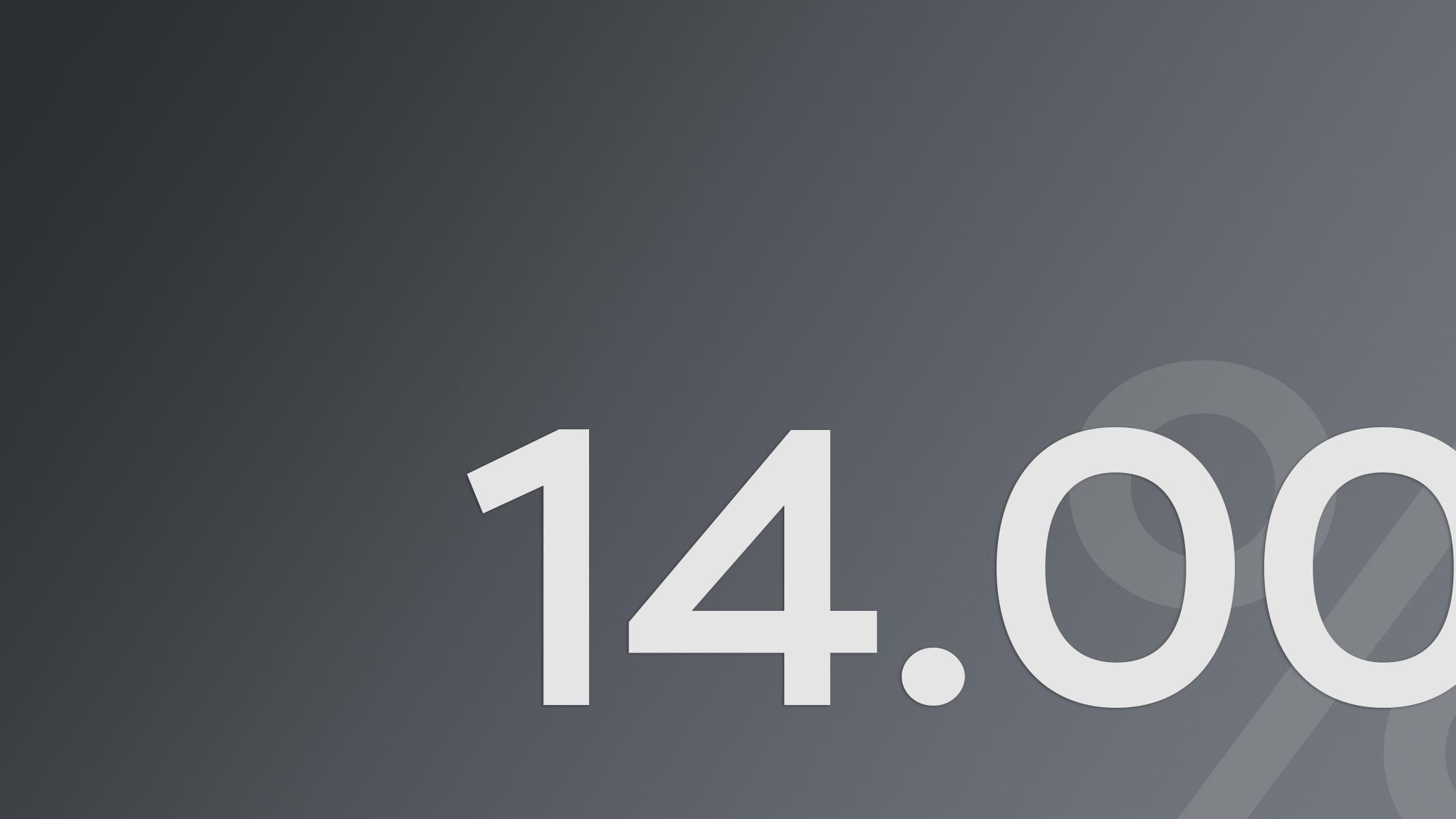
On 23 October 2026, the Bank of Russia Board of Directors decided to keep the key rate at 14.00% per annum. The economy as a whole is growing at a moderate pace in 2026 H2. Current price pressures remain elevated. Inflation expectations stay high. According to the Bank of Russia’s estimates, underlying price growth has not yet decreased and remains in the range of 5–6% in annualised terms, primarily due to the impact of a temporary reduction in production capacities in certain sectors. This requires aggregate demand to grow moderately for underlying inflation to resume its decline.
The Bank of Russia will make further key rate decisions based on the dynamics of inflation and inflation expectations as well as the analysis of risks posed by domestic and external conditions. The baseline scenario assumes that the key rate will average 12.5–13.5% per annum in 2027. According to the Bank of Russia’s forecast, given the monetary policy stance, annual inflation will return to 4.0% in 2027 and stay on target further on.
In 2026 Q3, the current seasonally adjusted price growth averaged 8.0% in annualised terms compared to 4.8% in 2026 Q2. The similar indicator of core inflation rose to 6.2% from 4.5% in 2026 Q2. Price dynamics were still affected by volatile components, primarily motor fuel. As of 19 October 2026, annual inflation stood at 6.8% and is expected to come in at 7.1–7.6% as of the end of 2026.
High inflation expectations impede a slowdown in inflation. Despite a slight decrease in the expectations of households and businesses in October, they have generally remained near two-year highs in recent months. Expectations of financial market participants and analysts have increased.
According to high-frequency data, the economy is growing at a moderate pace in 2026 H2. Business sentiment improved somewhat in October compared to low levels of the previous months. Growth in consumer demand is slowing but remains elevated. Investment activity continues to recover compared to the levels of early 2026.
The labour market tightness is gradually easing. Surveys indicate that business staffing levels continue to improve, although the situation varies across industries. Wage growth is slowing and gradually converging with labour productivity growth, although the gap between them remains significant. Concurrently, companies are planning more moderate wage indexations in 2027 compared to 2026. Unemployment is near its historic lows.
Monetary conditions are assessed as moderately tight. Interest rates rose in most segments of the financial market. Taking into consideration the dynamics of inflation expectations, the tightness of monetary conditions has not changed in real terms. Non-price bank lending conditions have tightened somewhat, specifically as regards credit quality requirements for corporate borrowers.
Lending activity was elevated in 2026 Q3 on average, driven primarily by the corporate segment. The retail loan portfolio grew moderately. Households’ propensity to save has decreased slightly but remains high.
Proinflationary risks prevail over disinflationary ones on the medium-term horizon. Main proinflationary risks are associated with the supply-demand imbalances, driven by higher domestic demand and a longer contraction of production capacities in certain industries. Elevated inflation expectations may intensify the pass-through of costs to prices. Proinflationary risks associated with a long period of wage growth outpacing productivity growth as well as with a deterioration in the global economic outlook and rising global price pressures amid geopolitical tensions are still in place. Disinflationary risks involve a more significant slowdown in domestic demand.
The Bank of Russia takes into account the announced parameters of fiscal policy. On the medium-term horizon, fiscal policy will help slow down inflation. Changes in the fiscal policy parameters may require an adjustment in the monetary policy pursued.
Following the Board of Directors’ key rate meeting on 23 October 2026, the Bank of Russia has updated its medium-term forecast.
On 5 November 2026, the Bank of Russia releases the Summary of the Key Rate Discussion and the Commentary on the Medium-term Forecast.
The Bank of Russia Board of Directors holds its next key rate meeting on 18 December 2026. The press release on the Bank of Russia Board decision is to be published at 13.30 Moscow time.
The reference to the Press Service is mandatory if you intend to use this material.
23.10.2026 13.30.00