Monitoring of the non-financial sector
The analysis of systemic risks of the non-financial sector involves:
- monitoring the situation in the key sectors of the Russian economy;
- assessing the current and forecast financial position of major non-financial organisations;
- analysing the financial position of an expanded sample of companies; and
- analysing small and medium-sized enterprises.
The monitoring of the non-financial sector involves assessing the dynamics of sector-aggregated indicators of net financial performance and overdue receivables, examining trends in sectoral markets, and analysing the impact of shocks on the economy.
The purpose of the monitoring is to timely detect negative trends in the key sectors of the Russian economy (oil and gas, ferrous metallurgy, coal mining, non-ferrous and precious metals, energy, fertilisers and chemicals, transportation, machine building, the agro-industrial complex and light industry, property development, retail and e-commerce, telecommunications and IT, the car market) as well as risks inherent in the operations of the largest non-financial organisations.
The monitoring of the residential real estate market involves analysing the volume of housing under construction, the sell-through rate, the ratio of the sell-through rate to the level of construction readiness, project financing interest rates and the ratio of debt coverage with funds in escrow accounts, as well as developers’ schemes, including the dynamics of instalment sales. Additionally, the regulator conducts a detailed analysis of the financial position of the largest developers and the quality of project financing in housing construction, including through the use of financial models.
Besides forecasting financial metrics, the Bank of Russia, together with banks that are major creditors (accounting for 90% of the market), conducts stress testing of the project finance portfolio. The tests help analyse the distribution of LLCR projects across banks’ current models and stress testing scenarios. The latter assume various levels of decline in sales-related cash flows and changes in the key rate in line with the scenarios set out in the Monetary Policy Guidelines.
Given their scale, the largest non-financial organisations have a significant impact on the relevant industries and the financial system and therefore require a more detailed assessment. The sources of data necessary for analysing such companies include annual and semi-annual consolidated financial statements of non-financial organisations compiled in accordance with International Financial Reporting Standards (IFRS), bank reporting, and open sources. A consolidated analysis factors in relationships between companies and the fair value of assets, which helps make a more precise assessment of a company’s actual position under market conditions.
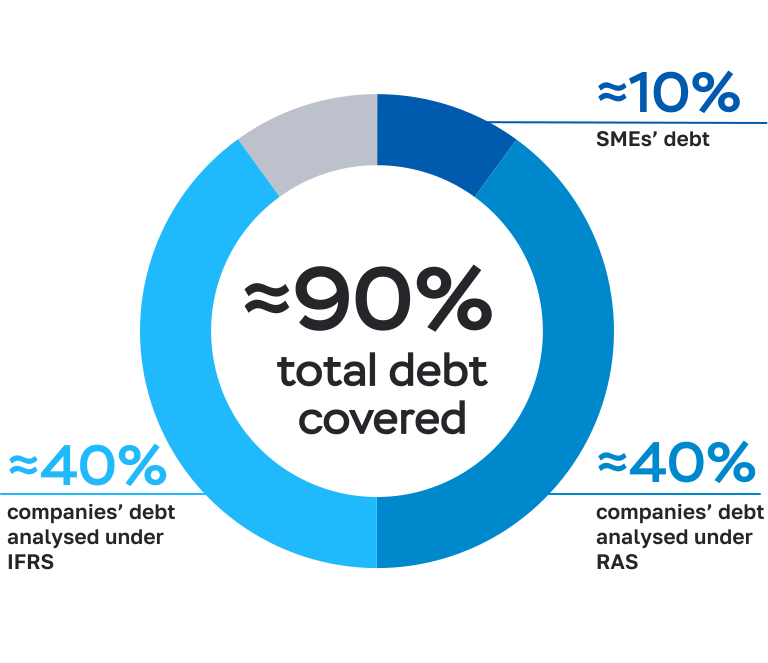
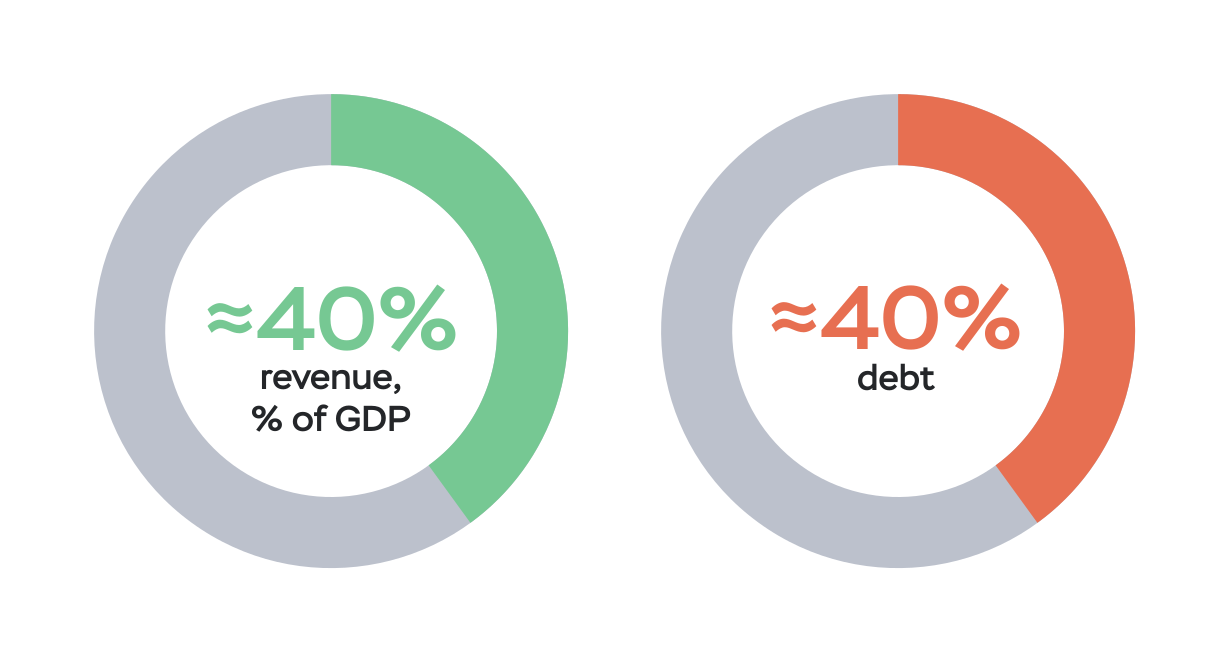
The assessment covers approximately 90 major non-financial companies (from 13 industries) with consolidated revenues accounting for around 40% of GDP and the overall debt for about 40% of total claims on companies.
Scope of the analysis of the largest non-financial companies
The main tool used in the analysis is comprehensive financial models for assessing the creditworthiness of Russia’s largest businesses. They help:
- forecast the main forms of companies’ consolidated financial statements compiled under IFRS (statements of financial position, financial results, and cash flows);
- assess the adequacy of cash flows for debt servicing and repayment;
- assess the amount of additional financing required to eliminate cash gaps, if any; and
- assess the creditworthiness of major non-financial companies under different scenarios of Russian and global economic development, including the dynamics of commodity and capital markets, sanctions pressure, and other restrictions.
Furthermore, the Bank of Russia regularly assesses the corporate sector’s sensitivity to changes in monetary conditions. To this end, it uses the interest coverage ratio (ICR), which measures companies’ ability to timely service their debts. If the ICR is below 1.0, a company has significant difficulties in servicing its debt. If the ICR ranges from 1.0 to 3.0, the company has an elevated interest burden and may experience difficulties in servicing its debt in case of interest expenses rise or its operating profit declines.
In addition to major companies, the Bank of Russia also analyses systemic risks based on the reporting under the Russian Accounting Standards (RAS) provided by an expanded sample of companies, which includes more than 44,000 organisations accounting for around 40% of total claims on companies. As part of the monitoring of the non-financial sector, the Bank of Russia also analyses the financial position of SMEs and the quality of their debt servicing.
Debt coverage (% of total claims on companies)