
Discussants: members of the Bank of Russia Board of Directors, senior executives of the Monetary Policy Department, the Research and Forecasting Department, and other Bank of Russia Departments and Main Branches.
The Monetary Policy Department together with the Research and Forecasting Department presented the results of the analysis of the current economic developments nationwide and worldwide, as well as the suggestions regarding the baseline macroeconomic forecast for 2026–2029 and its variations. The Bank of Russia Main Branches provided information on the situation in the Russian regions, including based on business surveys. Furthermore, the participants in the discussion considered the information from the Financial Stability Department and the International Settlements Department.
The discussants’ opinions are based on the data available as of 24 July 2026.
This Summary covers the key points of the discussion.
 Economic situation and inflation
In 2026 Q2, current price growth decelerated to 5.0% (seasonally adjusted annualised rate, SAAR) on average from 8.7% SAAR in 2026 Q1. Over this period, core inflation slowed to 4.2% SAAR on average from 6.2% SAAR in 2026 Q1. Current price growth sped up in June–July 2026, with households’ inflation expectations and businesses’ price expectations increasing sharply in July. Analysts adjusted their inflation forecasts for 2026–2028 upwards. According to high-frequency data, economic activity indicators improved in 2026 Q2, after declining in 2026 Q1. In July, the Bank of Russia’s Business Climate Index dropped to its lowest level since mid-2022. In May 2026, the unemployment rate remained at its all-time low of 2.1% (seasonally adjusted). In April, growth of nominal and real wages decelerated year on year.
Current price growth slowed down in 2026 Q2, although price dynamics varied markedly from month to month. The deceleration of current price growth in April–May was the result of the monetary policy pursued and the ruble appreciation in spring 2026 amid rising prices for Russian exports. The decline in inflation observed over these months was also associated with the fading effect of the VAT increase and lower fruit and vegetable prices. In June, current price growth accelerated sharply, driven primarily by one-off factors and volatile components. Temporary disruptions at certain production facilities caused a surge in motor fuel prices. Fruit and vegetable prices resumed growth.
The participants in the discussion pointed out that the increase in measures of underlying inflation was insignificant, with most of them remaining within the range of 4–5% SAAR. The slight rise in these measures was mainly attributable to growing food prices (excluding fruit and vegetables). That said, the earlier strengthening of the ruble continued to contain the increase in non-food prices (excluding petroleum products).
The discussants paid particular attention to direct and indirect effects of fuel price growth.
- According to the estimates, it directly contributed 0.3 pp to the increase in consumer prices in June and around 0.2 pp over the first two weeks of July. Nevertheless,
mid-July saw the first signs of a stabilisation in the motor fuel market, partly as a result of the measures taken by the Russian Government. The participants concurred that the direct impact of increased fuel prices on current inflation had already largely materialised. - Indirect effects of this factor are associated with the pass-through of higher transportation and production costs to prices for a wider range of goods and services as well as with the response of inflation expectations. Unlike the immediate influence, indirect effects might occur with a time lag and be longer-lasting. High-frequency data for July pointed to higher costs already feeding into prices across a wider range of goods and services. Households’ and businesses’ inflation expectations rose notably in July. Surveyed households attributed further price increases to higher fuel prices, while companies pointed to the resulting rise in costs.
- The scale of future indirect effects will depend on how fast inflation expectations decline and on the dynamics of domestic demand. According to some discussants, as prices for motor fuel stabilise, inflation expectations could go down rather fast, as it happened after the VAT increase, while domestic demand will grow at a moderate pace. In this case, companies will have limited opportunities to fully pass through higher costs to prices. Other participants emphasised that inflation expectations could remain elevated, with domestic demand continuing to surge against the backdrop of a contraction in production capacity. As a result, the impact of higher costs on prices might turn out to be stronger, and inflationary consequences of rising fuel prices could be more pronounced.
Following the discussion, most participants agreed that, considering the realised increase in fuel prices and its spillover into other product and service prices, annual inflation in 2026 would be higher than expected before. That said, second-round effects of higher fuel prices will materialise in 2026 for the most part. According to the estimates, the total contribution of direct and indirect effects of more expensive motor fuel to annual inflation will not exceed 1.5 pp. Underlying inflation is not expected to rise considerably. Over the remainder of the year, measures of underlying price growth will be close to their current levels, primarily staying within the range of 4–5% SAAR. Inflation will be 6–7% as of the end of 2026 and, given the monetary policy stance, will return to the target in 2027.
Following its decline in 2026 Q1, economic activity rebounded moderately in 2026 Q2. This was facilitated by both calendar and weather factors, which had the opposite effect at the beginning of the year. Specifically, in 2026 Q2, the number of business days was higher than a year before, and weather conditions normalised, also encouraging economic activity. Contrastingly, output in 2026 Q2 was affected by temporary disruptions at certain production facilities. Damage to oil refineries led to a reduction in the output of petroleum products and demand for crude. Limited transport and seaport capacity constrained the ability to export the surplus crude. As a result, oil production decreased as well. According to business surveys, the contraction in petroleum product output spilled over into other industries. Companies reported higher transportation costs and longer delivery times, with some of them also noting supply disruptions and downtime. Companies in trade, services, as well as transportation and storage adjusted their demand estimates downwards. Further on, lower demand might hamper economic activity in these industries.
According to the meeting, damage to production and infrastructure facilities in a number of sectors was temporarily constraining output and growth rates of the economy’s potential. Most participants assumed that enterprises would be able to gradually restore production capacity by the end of 2026 and therefore regarded the impact of the capacity reduction on output as temporary. However, certain discussants noted that the recovery could take more time. If opportunities to compensate for the shortfall through imports or redistribution of domestic supplies turn out to be limited, the implications for output in other sectors might be more significant and protracted, constraining economic activity for longer.
The expansion of consumer demand sped up in 2026 Q2. Certain participants attributed rising consumer activity to the earlier monetary easing and a decline in household saving. Additionally, consumption could be supported by high wage growth rates in 2026 Q1. Other discussants pointed out that accelerating consumer demand might, in part, be associated with transitory factors. The ruble appreciation in March–May could temporarily push up demand for durables.
Most participants believed that the data available were insufficient to conclude that the acceleration in consumer demand growth was considerable and sustainable. The available data on consumption mostly covered April–May when it was influenced by transitory factors, among other things. However, in July, companies’ demand expectations worsened notably. The waning effect of transitory factors, increased uncertainty in the economy, and more moderate wage growth rates might lead to more subdued consumption and aggregate demand.
After plummeting in 2026 Q1, investment activity picked up in 2026 Q2. In the future, investment might be supported by the recovery of damaged production facilities, while gross capital formation might be bolstered by the replenishment of depleted stocks. Certain participants noted that investment in the restoration of production capacity required additional physical resources, but would not increase potential output. This should be taken into account when assessing the output gap in the future.
The labour market continued to ease gradually. According to surveys, enterprises’ staffing levels improved. In April, wage growth was slower than in 2023–2025 but was still outpacing the increase in labour productivity. Most discussants believed that April’s data on wages could reflect their dynamics better as they were not distorted by the base effects, unlike the data for 2026 Q1. Business surveys also pointed to more modest wage growth in 2026. At the same time, the meeting believed that the easing in the labour market was not sustainable as the unemployment rate returned to its all-time low in May or even continued dropping in some Russian regions.
The participants highlighted that a slower reduction in the structural primary deficit, compared to the pace assumed in the current budget projections, indicated a stronger fiscal impulse, thus requiring the Bank of Russia to be more cautious when easing its monetary policy in the future. Budget spending in 2026 H1 exceeded last year’s trajectory and the historical norm. The Russian Government has not yet updated the path for reducing the structural primary deficit to zero by 2029. When preparing the medium-term forecast and making the key rate decision, the Board of Directors assumed that the structural primary deficit would gradually decrease from 2% of GDP in 2026 to 1% in 2027 and 0.5% in 2028. These assumptions will be updated following the publication of new budget projections.
Most discussants believed that supply-demand imbalances would not re-emerge, despite the temporary contraction in production capacity. They expected a gradual restoration of production facilities and a slowdown in domestic demand growth. However, certain participants pointed to the risk of a more protracted reduction in production capacity. If domestic demand continues surging in these conditions and exceeds the potential to expand output, the economy might revert to a positive output gap and inflationary pressures might intensify. To curb inflation and create an environment conducive to balanced and sustainable economic growth, the regulator will need to pursue tighter monetary policy.
 Monetary conditions
Money market rates and yields on federal government bonds (OFZ) rose over the period since the key rate meeting in June. Deposit rates barely changed. Fixed interest rates on corporate and retail loans were down in May. The increase in the portfolio of corporate loans decelerated in June, while the portfolio of retail loans was expanding faster month on month. The annual growth rate of money supply (M2) rose in June.
Most participants in the discussion concurred that monetary conditions in real terms had eased somewhat since the June key rate meeting due to higher inflation expectations. The discussants’ opinions on the degree of their tightness varied, although most of them estimated monetary conditions as moderately tight.
Nominal interest rates were mostly up.
- Money market rates and OFZ yields rose by 40–130 bp over the period since the June meeting. Specifically, medium- and long-term OFZ yields approached the levels observed before the start of the key rate cut cycle. Short-term yields were primarily driven by an increase in the expected key rate path. According to the participants in the discussion, the rise in long-term yields was mainly associated with higher uncertainty regarding fiscal policy parameters. Market participants could expect that a stronger fiscal impulse would lead to larger government borrowings and intensifying inflationary pressures, which would therefore require tighter monetary policy. Breakeven inflation derived from OFZ yields increased.
- Over the period since the June meeting, deposit rates barely changed, although certain banks raised them. These banks could thus respond to stronger demand for cash and lower growth rates of deposits amid sustained demand for loans. It was argued that given accelerated lending growth, banks’ competition for deposits could intensify, pushing up deposit rates.
- Fixed interest rates on corporate loans continued falling in May, whereas in June, according to high-frequency data, they edged up following a rise in corporate bond yields.
In 2026 Q2, the growth rate of banks’ claims on the economy was higher than in 2026 Q1. It was changing unevenly from month to month, decelerating in June, after speeding up in April–May, mainly on account of corporate loan dynamics. Contrastingly, the retail segment saw accelerated growth of both mortgages and unsecured consumer loans in June. Credit activity was supported by the earlier easing of monetary conditions. The participants noted that the overall increase in claims on the economy over 2026 H1 was within the range observed in 2016–2019.
In 2026 Q2, money supply was expanding faster than in 2026 Q1, which was associated with accelerated lending growth and active budget spending. In June, the increase in money supply accumulated since the beginning of the year exceeded the upper bound of the 2016–2019 range. As of year end, its growth rate will probably come in higher than assumed in the April forecast. The meeting noted that, given the budget’s significant contribution to the increase in money supply, limiting its effect on aggregate demand would require monetary policy to remain sufficiently tight to ensure more moderate lending growth than in 2026 Q2. Certain discussants emphasised that the growth rates of money supply observed this year could amplify proinflationary risks over the forecast horizon.
Households’ saving activity edged down in May–June, but remained high. At the same time, the structure of savings was changing. Specifically, deposits continued expanding, while their contribution to the increase in savings was declining. Simultaneously, the proportion of investments in real estate and financial market instruments as well as demand for cash were going up.
The estimates of current monetary tightness were diverse. Most participants considered monetary conditions to be moderately tight. Nominal rates remained high overall, while real ones stayed positive. After accelerating in April–May, the expansion of lending slowed down in June. A downtick in the saving ratio is a natural consequence of monetary easing. Concurrently, some discussants regarded monetary conditions as neutral, referring to deposit rates converging with households’ inflation expectations, accelerated lending and money supply growth in 2026 Q2, and declining household saving activity.
The quality of the credit portfolio remained acceptable. Most companies were profit-making and continued servicing their loans properly. Additionally, the key rate decrease over the previous 12 months reduced borrowers’ interest expenses as around two-thirds of corporate loans were issued at floating rates. Nevertheless, certain highly leveraged borrowers faced a deterioration in their financial standing. In June–July, the proportion of restructured loans in the total credit portfolio expanded. In the segment of small and medium-sized businesses, the default rate edged down due to banks’ tighter requirements for borrowers’ creditworthiness in 2025–2026. As for retail lending, the macroprudential measures taken helped improve the quality of new disbursements and stabilise the share of non-performing loans. The banking sector remained resilient overall, including due to the accumulated capital buffer.
 External environment
According to high-frequency data, global economic growth decelerated in 2026 Q2. Inflationary pressures and inflation expectations in key economies increased, prompting market participants to revise their interest rate expectations upwards. Prices for crude and most other Russian exports went up over the period since the June meeting, but declined from the April meeting, while exceeding the 2025 average. In June–July, the ruble weakened against the main foreign currencies.
The conflict in the Middle East still had a greater effect on global inflation than on economic activity. Despite a large-scale price shock in commodity markets in late 2026 Q1, the world economy continued growing sustainably. At the same time, inflationary pressures in key advanced economies were stronger than expected. The participants in the discussion noted that the uncertainty regarding future dynamics of global inflation persisted. It was associated with possible second-round effects of the commodity shock, among other things. Namely, cost pressures might gradually spill over into a wider range of goods and services even after commodity prices decline. Most leading central banks kept their policy rates unchanged, while some started to raise them. Against this background, the Bank of Russia’s key rate cuts are causing a more pronounced narrowing of the interest rate differential between Russia and other countries.
The conflict in the Strait of Hormuz has so far had a disinflationary effect on the Russian economy. Rising global energy prices pushed up export earnings and supported the ruble appreciation in March–May. This effect has already largely translated into moderate dynamics of consumer prices in spring 2026.
The discussants highlighted that crude prices in 2026 H2 might be lower than assumed in the Bank of Russia’s April forecast. Following the agreement to restore navigation in the Strait of Hormuz, crude oil prices started adjusting downwards faster than expected, although remaining highly volatile. In the event of a lasting ceasefire and a steady recovery in oil production by OPEC+ over the remainder of the year, the global market might return to a surplus as early as 2026 Q4. That said, the reduced stocks will probably be replenished gradually, while the related demand for crude will only partly mitigate the impact of supply growth on the market equilibrium. However, the sustainability of the ceasefire in the Middle East remains a factor of uncertainty.
In 2026 Q2, the current account balance went up, coming in above last year’s level owing to a higher value of exports. Imports expanded as well on the back of the earlier ruble appreciation and stronger consumer demand in 2026 Q2, partially constraining the increase in the balance of trade. In 2026 H2, the value of exports will be limited by the consequences of the temporary contraction in production and infrastructure capacity as well as by a decline in global crude prices. A reduction in petroleum product exports will be partly offset by larger exports of crude oil.
Over the period since the June meeting, the ruble returned to the level of late April 2026. The participants primarily attributed the ruble weakening to a notable drop in prices for key Russian exports since
 Inflation risks
The participants in the discussion concurred that proinflationary risks were still outweighing disinflationary ones over the medium-term horizon. Moreover, proinflationary risks have increased since the June meeting.
The main proinflationary risks include:
- A significant fiscal impulse over the medium-term horizon. There is still uncertainty regarding the path for decreasing the structural primary deficit to zero by 2029. The slower the deficit is reduced, the more restrictive effect monetary policy should produce on credit activity and aggregate demand to avoid a rise in inflationary pressures. Another proinflationary factor might be an expansion of subsidised lending programmes, which will weaken the restraining effect of monetary policy on demand.
- Imbalances between demand and supply. Consumer activity might remain high, supported by fast lending expansion, declining saving activity, and growth of wages outpacing that of labour productivity amid persisting tightness in the labour market. Along with consumer activity, high budget spending might also push up domestic demand. Simultaneously, disruptions at certain production facilities might turn out to be more protracted than assumed. As a result, domestic demand growth might again outstrip the capacity to ramp up output, thus exacerbating inflationary pressures.
- Persistently high inflation expectations. If households’ and businesses’ inflation expectations remain high for a long period, including due to the situation in the fuel market, this might lead to greater pass-through of higher costs to prices and hamper the decline in underlying inflation.
- Deteriorating external conditions. There is still uncertainty surrounding the future trajectory of the Middle East conflict and the implications of increased commodity prices for the world economy and inflation. Weaker global economic growth might constrain demand for Russian exports. Export earnings might also decline in the event of a faster recovery of crude oil supply and a decrease in global prices. Accelerating global inflation, including due to new supply disruptions and higher logistics costs, might amplify inflationary pressures in Russia through more expensive imports.
The main disinflationary factor is:
- A notable slowdown in domestic demand growth. Moderately tight monetary conditions, coupled with a higher tax burden and increased uncertainty in the economy, might have a more pronounced effect on demand dynamics than estimated. Companies might cut back their investment, hiring, and wage indexation plans more notably. Consumer activity might weaken due to households’ higher propensity to save amid increased uncertainty. As a result, domestic demand growth might decelerate considerably, while inflation might deviate downwards from the target.
 Conclusions for monetary policy and the key rate decision
The meeting considered the updated forecast estimates – the baseline scenario and its variations.
Based on the data analysis and forecasts, the discussants considered the following two alternatives:
- keeping the key rate unchanged at 14.25% per annum; or
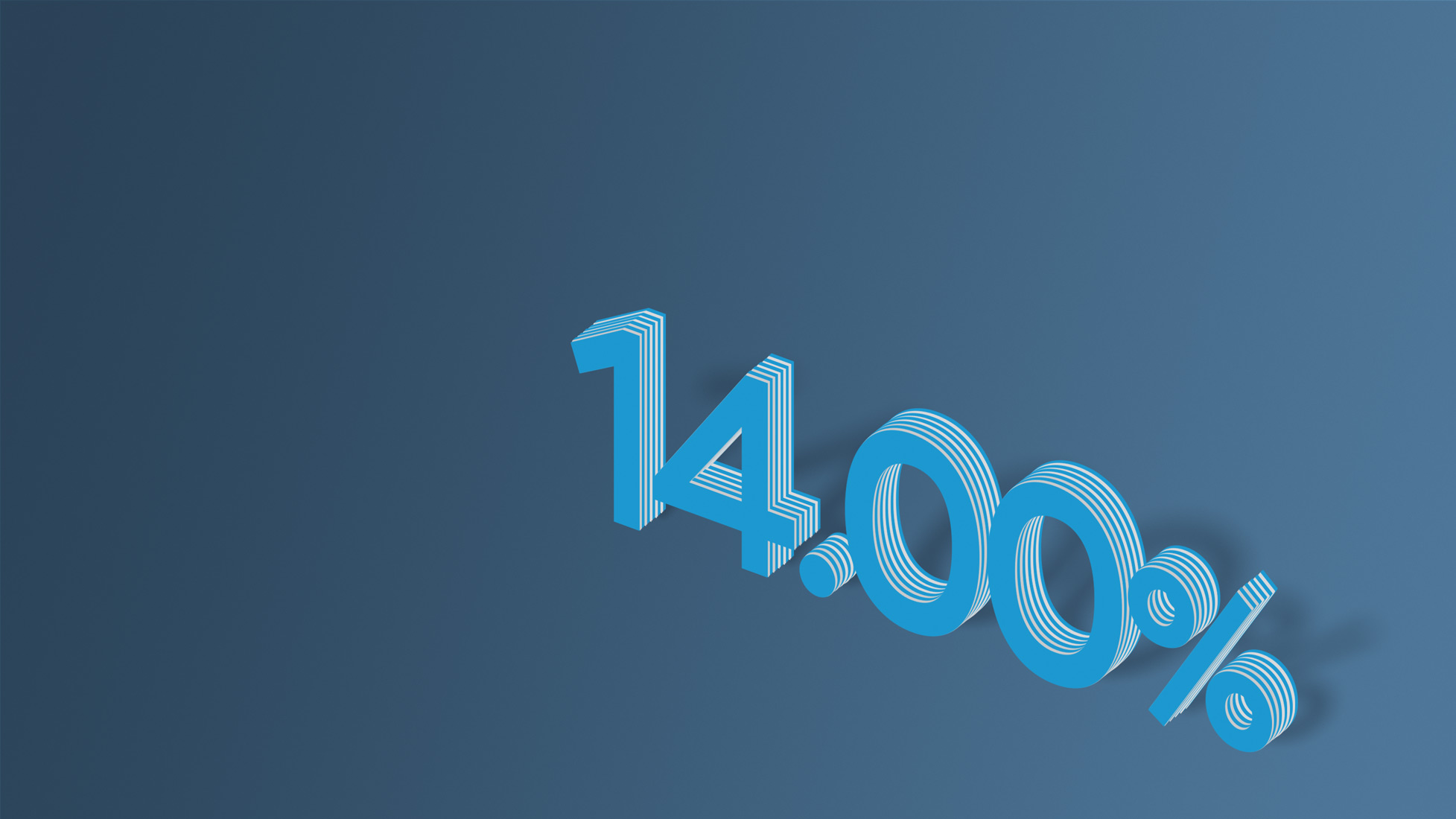
- cutting the key rate by 25 bp to 14.00% per annum.
According to most participants, there was still (albeit less) room for a key rate reduction until the end of the year. Their opinions varied in terms of how fast the key rate should be cut: some argued for lowering it at the current meeting, while others preferred to keep the key rate unchanged and consider reducing it later. As for a possible increase in the key rate, there was no substantive discussion about this.
The main arguments of those who proposed keeping the key rate unchanged were as follows:
- A considerable acceleration in current price growth and the uncertainty regarding second-round effects of higher fuel prices. In June, current price growth exceeded 10% SAAR and, according to weekly data, remained high in July. Certain measures of underlying inflation increased as well. Inflation expectations were also up. More data are needed to draw a definitive conclusion as to whether the rise in inflationary pressures is transitory or persistent. Second-round effects of higher fuel prices may yet materialise in the future. A pause in cutting the key rate would allow the regulator to receive more data to evaluate the scale and persistence of these effects.
- A possible weakening of the restraining influence of monetary conditions. Considering increased inflation expectations, monetary conditions might have become close to neutral. This is evidenced by accelerated lending growth in 2026 Q2 and the decline in households’ saving activity.
- Insufficient data to confirm that the rebound in consumer demand is transitory. In 2026 Q2, the increase in consumer demand sped up, outstripping expectations. Consumption could be supported by high growth rates of wages in 2026 Q1. That said, a deceleration in their rise in April might turn out to be temporary considering the persisting tightness in the labour market.
- The uncertainty regarding the time required to restore production capacity. A slower recovery might reduce the economy’s potential and strengthen inflationary pressures even if demand reverts to more modest dynamics.
- A stronger fiscal impulse. The trajectory of a decline in the structural primary deficit over the medium term has not been determined yet. Given a more considerable expansion in government demand, returning inflation to the target might require tight monetary policy for a longer period to ensure moderate growth of lending and private demand.
The main arguments of those who proposed cutting the key rate by 25 bp were as follows:
- The acceleration in current price growth being transitory. Faster growth in June was primarily attributable to one-off and volatile factors (rising prices for fuel and the dynamics of fruit and vegetable prices), while most measures of underlying inflation remained within the range of 4–5% SAAR. Furthermore, July saw signs of a stabilisation in the fuel market. Therefore, the earlier acceleration did not mean a persistent intensification of inflationary pressures.
- A limited scale of second-round effects of rising fuel prices amid more modest demand. The direct impact of higher fuel prices on inflation has already largely materialised. Surveys indicated a decrease in companies’ demand and output expectations, which might limit their opportunities to pass through growing costs to prices. The increase in inflation expectations might turn out to be transitory, as was the case after the VAT rise.
- One-off factors of accelerated consumer demand growth. In 2026 Q2, it could be fuelled by stronger demand for cars and imports on the back of the ruble appreciation in spring 2026. In April, wage growth slowed down, while companies’ wage indexation plans for 2026 were moderate. The increase in consumer activity might also be constrained by higher uncertainty in the economy.
- Monetary conditions staying moderately tight. Nominal rates stayed high, and real ones were positive. Despite its acceleration in April–May, lending growth was overall in line with the forecast trajectory.
- A limited impact of the fiscal impulse on underlying inflation in 2026. Despite active budget spending in 2026 H1, underlying inflationary pressures in 2026 Q2 generally remained within the range of 4–5% SAAR. This could indicate that the additional impact of fiscal policy on demand has so far been largely offset by the restrictive effect of monetary policy.
Following the discussion, most participants concluded that a 25 bp key rate cut at the current meeting was in line with the objective to bring inflation back to 4% in 2027.
The discussants proposed different signals depending on the key rate decision.
- Most of those supporting a 25 bp key rate cut suggested giving no signal regarding future steps. They believed that the acceleration of consumption and current price growth was rather temporary and second-round effects of rising fuel prices would be limited, however, the uncertainty regarding these factors persisted. Furthermore, the medium-term budget parameters are yet to be disclosed. In this context, there is still uncertainty as to whether there will be more room for an additional key rate reduction at the upcoming meetings.
- The participants proposing to keep the key rate unchanged were mostly in favour of a moderately dovish signal indicating that the Bank of Russia would assess the need for further key rate cuts at the upcoming meetings. According to them, this signal would be consistent with the baseline scenario allowing for a gradual key rate reduction.
Following the discussion, most participants voted for cutting the key rate by 25 bp and giving no signal regarding further steps, on the grounds that this would increase the flexibility for future decisions amid substantial proinflationary risks.
Following the discussion, on 24 July 2026, the Bank of Russia Board of Directors decided to cut the key rate by 25 bp to 14.00% per annum. The Bank of Russia will make its further key rate decisions based on the dynamics of inflation and inflation expectations as well as the analysis of risks posed by domestic and external conditions. Given the direct and second-round effects of the temporary decline in production capacity and more expansionary fiscal policy, a smoother key rate decrease is required. Therefore, the forecast range for the average key rate was raised to 14.5–14.6% per annum in 2026, 10.5–12.5% per annum in 2027, and 8.0–9.0% per annum in 2028. In 2029, the key rate is expected to average 7.5–8.5%, which corresponds to the estimate of its long-term neutral level.
The Bank of Russia forecasts that, given the earlier surge in fuel prices, annual inflation will equal 6.0–7.0% in 2026. Monetary policy will aim to keep underlying inflation within the range of 4–5% SAAR in 2026 H2, bring annual inflation back to the target in 2027, and maintain it close to 4% further on. The GDP growth forecast for 2026 was lowered to 0.0–1.0%, including due to the temporary contraction in production capacity in certain industries. In the future, the economy is expected to expand at a rate of 1.5–2.5% per year, which is in line with the long-term growth rates of potential output. More details on the Bank of Russia’s medium-term projections are available in the Commentary on the Bank of Russia’s Medium-term Forecast.
